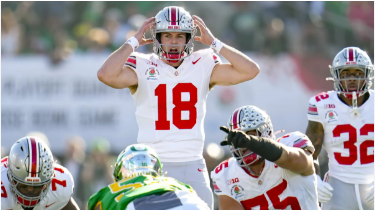
Will Howard served as Kansas State’s starting quarterback from 2020 to 2023, a period when Name, Image, and Likeness (NIL) opportunities were still developing. Reflecting on his time in a recent report by The Athletic, Howard admitted he wasn’t pleased with how things played out financially.
Howard explained that, while Kansas State didn’t exploit him in a traditional sense, he felt shortchanged—especially since he split reps with backup Avery Johnson despite starting more than 20 games. He noted that later in his career, his backup was actually earning more through NIL deals. Most of Howard’s own earnings, he said, didn’t come from the school’s collective but from local business partnerships he secured independently.

“Everything I did was on my own,” Howard said, adding that his experience changed dramatically after transferring to a program where he became the primary face of the team. He was referring to his lone season with Ohio State, where he reached the peak of college football by winning a national championship in the Big Ten.
During that standout year, Howard threw for 4,010 yards and 35 touchdowns with 10 interceptions, posting a 175.3 quarterback rating. That single season accounted for nearly 70% of his total college passing yards, a sharp contrast to the 5,786 yards he accumulated over multiple seasons at Kansas State. His success was aided by a talented receiving group, including standout Jeremiah Smith.
Financially, Howard’s situation also highlights the shifting landscape between college and professional earnings. Reports indicated he earned just under $900,000 in his rookie season with the Pittsburgh Steelers after being selected in the sixth round of the 2025 NFL Draft far below his estimated NIL valuation of $1.5 to $2 million in 2023.
He’s not alone in that situation. Notre Dame quarterback Riley Leonard has reportedly faced a similar gap, while Ole Miss QB Trinidad Chambliss is projected to earn over $5 million if he returns for another collegiate season. The comparison raises questions about the value of turning pro early versus staying in school.

Leonard, however, still sees benefits beyond the money, noting that managing income during college helped him grow, even if the classroom lessons didn’t leave a lasting impression. Meanwhile, Howard’s journey underscores just how dramatically NIL has reshaped the financial realities of college football.
Leave a Reply