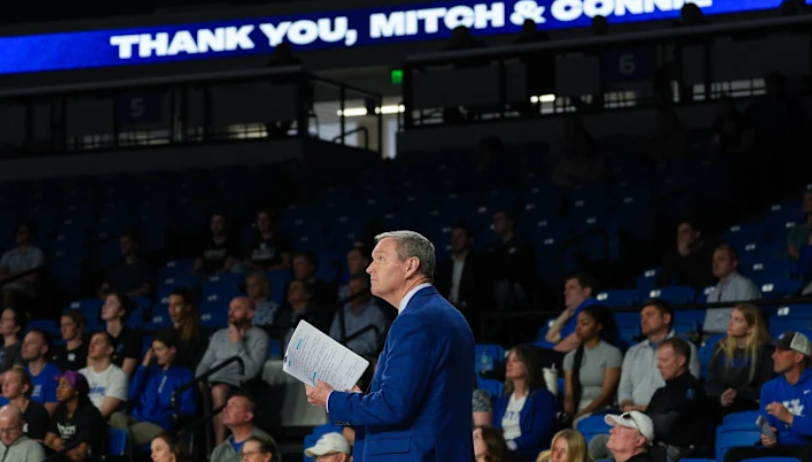
In the NIL era, competing at the highest level demands significant financial sacrifices, and Kentucky is exploring every possible revenue stream. The university’s latest move partnering with its often-criticized NIL affiliate, JMI, to sell naming rights to Historic Memorial Coliseum has pushed legendary sportswriter Oscar Combs to the brink of renouncing his support for UK. The coliseum hosts Kentucky’s women’s basketball, volleyball, and gymnastics teams. Combs wrote on X: “This breaks my heart. Is everything for sale on the UK campus? Sadly, looks like answer is ‘yes.’” In today’s college sports landscape, he may unfortunately be right.
Oscar Combs is a longstanding figure in Kentucky sports media. Alongside his brothers Ira and Harold both legends in Eastern Kentucky, with Ira now deceased Combs helped found the Joe B. Hall Prep Classic and spent decades championing the mountain communities. He wrote for the Courier-Journal, edited the Hazard Herald, and in 1976 founded The Cats’ Pause, becoming the voice of the everyday Kentucky fan for a generation. Inducted into the Kentucky Hall of Fame in 2024 with Tony Delk, Combs continues to pen supportive columns about UK. That makes his recent declaration all the more striking: “The day UK commercializes the revered name ‘Memorial Coliseum’ is the day I will no longer support UK or its leadership in any way in the future.”
NIL wasn’t always so despised. In 2004, Olympic skier and college football player Jeremy Bloom had to leave college due to sponsorship money from his skiing career exactly the sort of issue NIL was meant to solve. Players should be paid for autographs and commercials. But the collective system has soured the fan experience, turning college sports into pay-to-play mercenary basketball. Funding that system requires vast sums, which is why JMI is now considering jersey patches and arena branding. Combs’s outrage, however, has deeper roots.
Historic Memorial Coliseum is a literal memorial to fallen service members. Outside stand statues bearing the names of Kentucky natives who died in World War II, the Korean War, and the Vietnam War, with every county represented. It is far more than a sports venue. Programs evolve, and college sports have always changed, but not every campus landmark carries the same meaning nor should every building become a billboard. Kentucky is scrambling to keep pace in a new era, but in doing so, it now faces a deeper question beyond wins, losses, or recruiting rankings: What is worth protecting, even if it comes at a cost?
Leave a Reply